
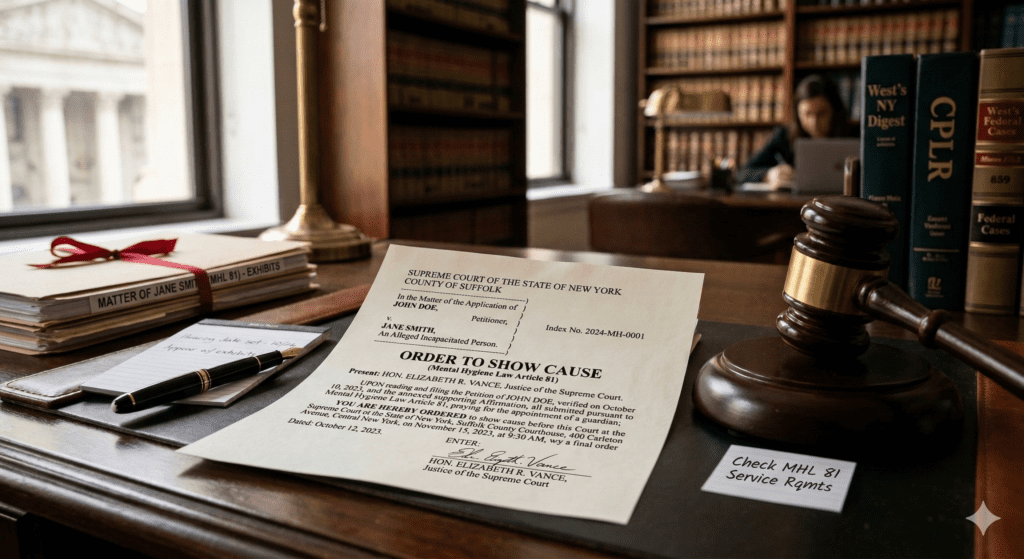
When a family member can no longer manage personal or financial affairs, an Article 81 guardianship may be necessary. For many people, the most stressful part of the process is the court hearing. If you’re wondering what happens at an Article 81 guardianship hearing, understanding the process can help ease some of the anxiety.
If you are filing for guardianship in New York, it helps to understand what actually happens at an Article 81 guardianship hearing, who will be there, what the judge considers, and how to prepare.
Quick Answer: What Happens at an Article 81 Guardianship Hearing?
At an Article 81 guardianship hearing, the court reviews whether the alleged incapacitated person needs a guardian, what powers are necessary, and whether a less restrictive alternative would be sufficient. The judge may hear testimony, review the court evaluator’s report, consider medical and financial evidence, and decide whether to appoint a guardian. You can learn more here.
Why the Guardianship Hearing Matters
An Article 81 hearing is important because the court is deciding whether to give another person legal authority over someone’s personal needs, finances, or both.
Because guardianship can affect a person’s rights and independence, the court does not grant it automatically. The judge must determine whether guardianship is necessary and, if so, what powers should be granted.
Who Is Usually Present at the Article 81 Hearing?
The people present may include:
-
the petitioner
-
the alleged incapacitated person (AIP)
-
the petitioner’s attorney
-
the attorney for the AIP, if one is appointed
-
the court evaluator
-
family members or other interested parties
-
witnesses, if testimony is needed
The exact participants depend on whether the matter is contested and how complex the case is.
What the Judge Considers During an Article 81 Guardianship Hearing
At the hearing, the judge focuses on whether the person is unable to manage personal needs or property and whether a guardian is necessary.
The court may consider:
-
the person’s functional limitations
-
medical or mental health evidence
-
ability to understand and make decisions
-
risk of harm, neglect, or financial exploitation
-
whether less restrictive alternatives exist
-
the scope of powers being requested
The court does not simply ask whether a person has a diagnosis. The focus is whether the person can manage the relevant decisions and whether a guardian is needed.
What Role Does the Court Evaluator Play?
The court evaluator plays a major role in many Article 81 Guardianship cases. The evaluator investigates the situation, interviews the alleged incapacitated person and other relevant individuals, and reports findings to the judge.
The evaluator may address:
-
whether guardianship appears necessary
-
what powers may be appropriate
-
whether the proposed guardian is suitable
-
whether the alleged incapacitated person objects
-
whether there are less restrictive alternatives
Will the Alleged Incapacitated Person Have to Appear?
In many cases, yes. The alleged incapacitated person generally has the right to be present at the hearing unless the court determines otherwise.
This is one reason Article 81 proceedings can feel sensitive and emotionally difficult. The hearing is not just paperwork. It is a court proceeding that directly affects a person’s autonomy.
What Evidence Is Presented?
The evidence depends on the facts of the case, but may include:
-
testimony from the petitioner
-
testimony from family members or caregivers
-
medical records or affidavits
-
financial records
-
evidence of unsafe living conditions
-
evidence of unpaid bills, exploitation, or confusion
If the case is contested, the hearing may involve more testimony and closer scrutiny of the requested guardianship powers.
What Happens at an Article 81 Guardianship hearing if it is Contested?
If the alleged incapacitated person or a family member objects, the hearing may become more complicated.
Contested issues may include:
-
whether guardianship is necessary at all
-
who should serve as guardian
-
whether the requested powers are too broad
-
whether there is conflict among family members
-
whether another option should be used instead
Contested hearings usually take longer and often require more preparation.
What Does the Judge Decide at the End of the Hearing?
If the judge determines that guardianship is necessary, the court may:
-
appoint a guardian
-
define the guardian’s powers
-
limit powers to what is actually necessary
-
require initial and annual reporting
-
impose other court supervision requirements
The court may appoint a guardian of the person, a guardian of the property, or both.
Can the Judge Deny the Petition?
Yes. The judge may deny the petition if the evidence is not sufficient or if a less restrictive alternative is available.
That is one reason careful preparation matters. The hearing is not automatic, and the court expects the petitioner to justify the request.
How to Prepare for an Article 81 Hearing
Practical steps include:
-
making sure the petition is complete
-
ensuring service was done correctly
-
gathering relevant records early
-
preparing to explain why guardianship is necessary
-
identifying the specific powers requested
-
anticipating questions about alternatives
If you are still at the beginning of the process, you may also want to read:
How to File an Article 81 Guardianship in Suffolk County, NY
https://probatelawyerli.com/how-to-file-article-81-guardianship-suffolk-county/
Do You Need a Lawyer for the Hearing?
Some people attempt to handle guardianship proceedings on their own. However, the hearing is often the point where procedural mistakes, weak evidence, or family conflict create serious problems.
You may also want to read:
Do I Need a Guardianship Attorney in Suffolk County, NY?
https://probatelawyerli.com/do-i-need-guardianship-attorney-suffolk-county/
What Happens After the Hearing?
If the court appoints a guardian, that is not the end of the matter. Guardians often have ongoing duties, including filing reports and, in some cases, detailed financial information.
Related resource:
MHL Article 81 Annual Accounting: What Guardians Must File in New York
https://probatelawyerli.com/mhl-81-annual-accounting-new-york/
Related resource:
What Does a Court Examiner Do in New York Guardianship Cases?
https://probatelawyerli.com/court-examiner-new-york-article-81/
FAQs About Article 81 Guardianship Hearings
Is an Article 81 hearing always required?
A court hearing is a central part of the Article 81 process, although the exact scope of the hearing may vary depending on the case.
Can family members testify?
Yes. Family members and other witnesses may testify if their testimony is relevant to the issues before the court.
Does the judge automatically appoint the proposed guardian?
No. The court must determine whether guardianship is necessary and whether the proposed guardian is appropriate.
What if the person objects to guardianship?
The court will consider the objection, and the case may become contested.
Speak With a Suffolk County Guardianship Attorney
If you are preparing for an Article 81 hearing in Suffolk County, wondering what happens at an Article 81 guardianship hearing, or are concerned about objections, evaluator issues, or the scope of powers being requested, legal guidance can help you prepare effectively and avoid unnecessary delays.
Learn more about our guardianship services:
https://probatelawyerli.com/guardianship/
Or contact us to discuss your situation:
https://probatelawyerli.com/contact-us/